
 English
 Author: Site Editor Publish Time: 2026-01-17 Origin: Site


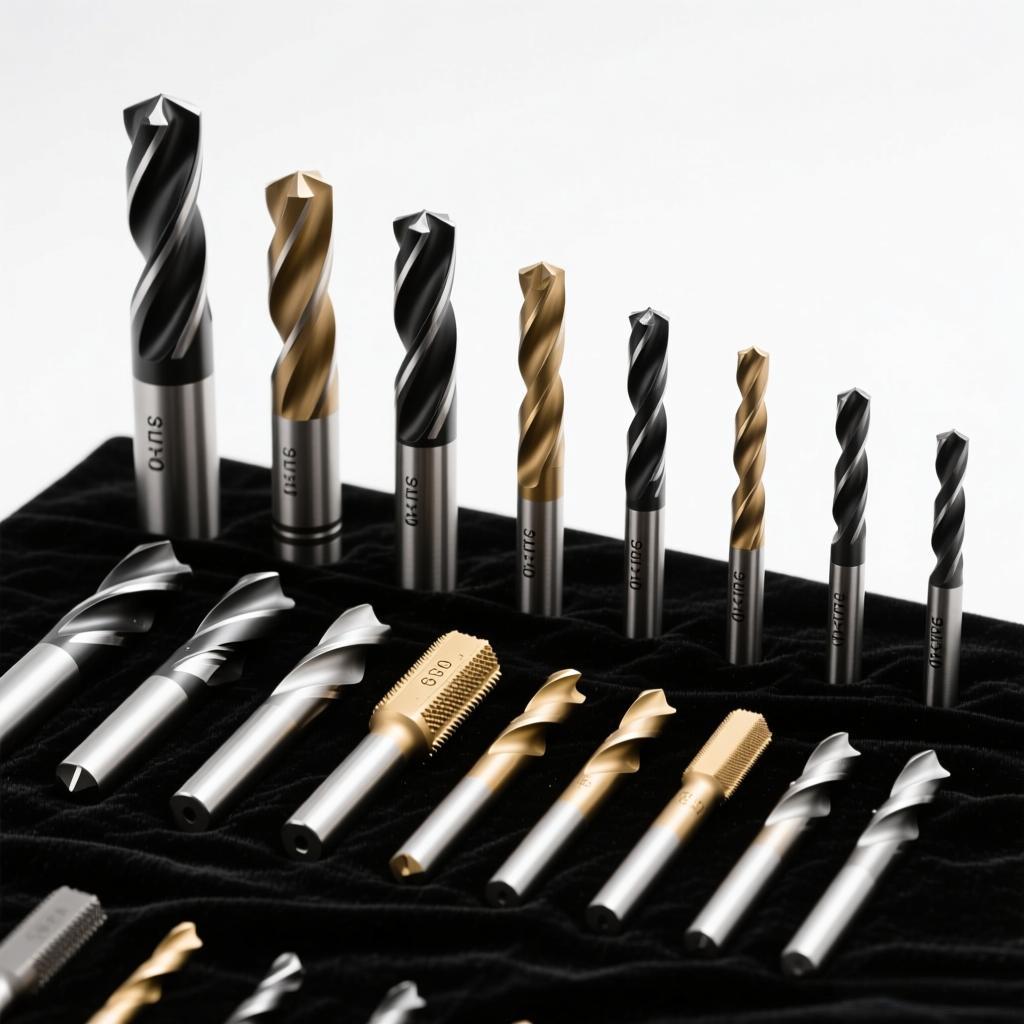
I. Core Principles for Tool Selection
Applicability first : The cutting tool must be capable of achieving the processing objective (such as removing allowance and ensuring accuracy), and be compatible with the workpiece and the machine tool to avoid collision.
Rigidity and stability : Give priority to short overhang and large-diameter tools to reduce vibration and ensure processing safety.
Economical and efficient : balancing tool cost, lifespan and processing efficiency, indexable tools are suitable for large quantities, and integral tools are suitable for complex parts.
Ⅱ. Selection Steps and Key Factors
Step 1: Clarify the processing requirements
Processing stage : Rough machining uses tools with good rigidity but low precision (such as two-edge end mills); Durable and high-precision cutting tools (such as four-edge end mills) for semi-finishing and finishing.
Machining area : ball-end mills for complex cavities; Keyway milling cutter for closed slots; Face milling cutters for large-area planes.
Step 2: Match the workpiece material
Aluminum alloy/copper alloy : Select high-speed steel (HSS) or diamond tools, with no more than 4 teeth to prevent built-up edge.
Stainless steel/titanium alloy : Select coated cemented carbide or cobalt-containing high-speed steel, and pay attention to anti-adhesion.
Hardened steel : choose cubic boron nitride (CBN) or ceramic tools.
Step 3: Adapt the machine tool performance
Spindle compatibility : ensure that the tool shank diameter (e.g. 20mm) and cutting edge diameter match the machine tool.
Power matching : Select tools and parameters based on the machine tool power (e.g. 20hp) to achieve efficient cutting.
Step 4: Optimize tool parameters
Geometric parameter : the number of edges affects chip removal and vibration (two edges for soft materials and four edges for hard materials); Diameter and overhang affect rigidity.
Cutting parameters : Adjust the feed rate and cutting depth according to the precision requirements.
Ⅲ. Quick Check of Tool Types (Common Scenarios)
| Processing scene | Recommended knives | Core features |
| Planar | End mills, face mills | It has strong versatility, and the end face cutting edge is a secondary cutting edge |
| Curved Surface | Ball nose end mill | The hemispherical tip reduces vibration and improves smoothness |
| Slotting | Keyseat cutter | The helix Angle is small, the groove is deep, and chip removal is easy |
| Spot facing work | Drill bit (rough), reamer (fine) | Drill bits for drilling and reamers for precise reaming |
| Thread machining | Thread milling cutter | Integral type or insert type, processing internal/external threads |


